


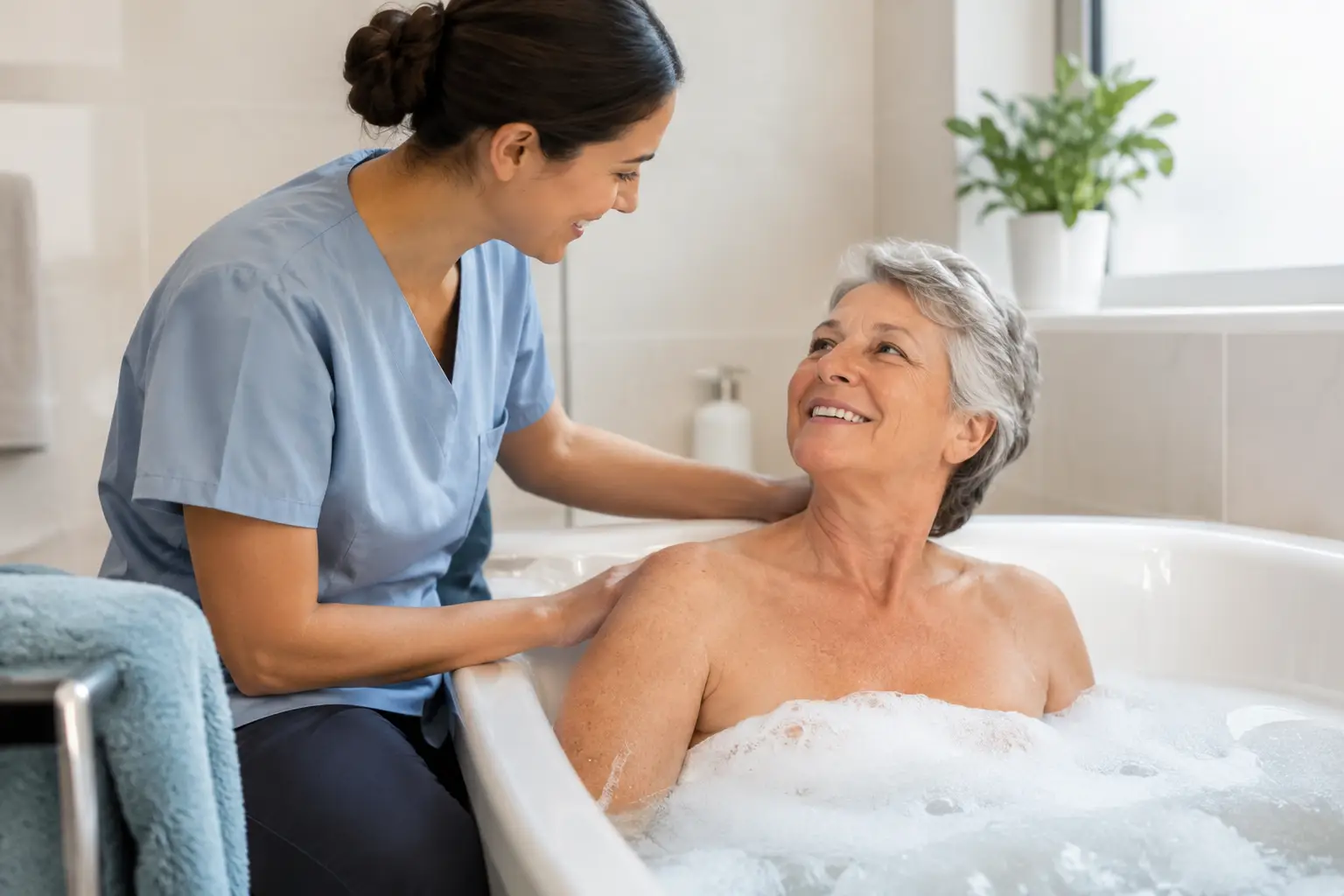
A bathroom can become hazardous in seconds. A wet tile floor, a moment of dizziness while standing, or a rushed transfer into the tub can turn a familiar routine into a frightening fall. Yet bathing is also deeply personal. A thoughtful guide to safe bathing assistance must protect physical safety without taking away a loved one’s comfort, privacy, or sense of control.
For many older adults and adults living with disabilities or chronic health conditions, a little well-planned support makes it possible to continue bathing at home with greater confidence. The goal is not to take over. It is to provide the right amount of assistance for the person’s current abilities, preferences, and health needs.
Why Safe Bathing Assistance Deserves Careful Planning
Bathrooms present several risks at once: hard surfaces, tight spaces, slippery water, changes in temperature, and movements that require balance. Arthritis, weakness after illness, vision changes, neuropathy, Parkinson’s disease, dementia, medication side effects, and low blood pressure can all make bathing more difficult.
Families sometimes assume that a loved one can manage because they have always valued independence. But near-falls, avoiding showers, wearing the same clothes for several days, or asking someone to stand nearby may signal that the routine no longer feels safe. These changes are not a personal failure. They are an invitation to adjust the care plan with grace.
The right approach depends on the individual. Someone who is steady on their feet may only need a grab bar and a shower chair. Someone with significant mobility limitations may need hands-on support, a different bathing setup, or a caregiver trained to assist with transfers. When there is uncertainty, it is wiser to plan for safety than to wait for an injury.
A Guide to Safe Bathing Assistance Begins Before the Water Runs
The safest bath or shower starts with preparation. Rushing creates preventable risks, especially when a person feels cold, fatigued, embarrassed, or unsteady. Set aside enough time so the experience can remain calm and respectful.
Before helping your loved one into the bathroom, gather towels, clean clothing, washcloths, soap, shampoo, lotion, continence supplies, and any mobility devices they use. Keep these items within easy reach so no one has to leave the person unattended. Check that the path to the bathroom is clear of loose rugs, cords, laundry, and low furniture.
Warm the room if possible, since feeling chilled can increase discomfort and muscle tension. Test the water before use. It should feel comfortably warm, not hot. Older adults and people with reduced sensation may not recognize excessive heat quickly, making burns a real concern. A faucet anti-scald device can add another layer of protection.
Encourage a bathroom trip before bathing, particularly for someone who experiences urgency. If your loved one is prone to dizziness, ask them to sit for a moment before standing and to move slowly. Some medications can cause lightheadedness, so notice whether bathing is easier at a particular time of day.
Create a Safer Physical Setup
A few purposeful changes can make a meaningful difference. Nonslip mats inside and outside the shower or tub help reduce slipping, but they should lie completely flat and be replaced when worn. Securely installed grab bars near the toilet and bathing area offer stable support. Towel bars and soap dishes are not designed to hold a person’s weight.
A shower chair or transfer bench can reduce the need to stand during bathing. A handheld showerhead lets the person rinse while seated, which can be especially helpful for those with fatigue, poor balance, or shortness of breath. For a high tub wall, a transfer bench often provides a safer option than stepping over the edge.
Equipment is valuable only when it fits the person and the space. A chair that is too low, a cluttered shower floor, or a grab bar placed out of reach can create new difficulties. An occupational therapist, physical therapist, or experienced home care professional can help identify modifications that match the individual’s movement and home layout.
Offer Help Without Taking Over
Bathing assistance should be collaborative. Begin by asking how your loved one prefers to be helped and what they can comfortably do on their own. One person may welcome help washing their back or lower legs but prefer to manage their face, hair, and private hygiene independently. Another may feel more secure with a caregiver close by throughout the shower.
Use clear, respectful language before offering physical support. Let the person know what will happen next: “I’m going to steady the chair while you sit,” or “Would you like help rinsing your hair?” This preserves choice and prevents surprise, which is particularly important for people living with anxiety, trauma, dementia, or cognitive changes.
Protect privacy in practical ways. Keep the door closed, use a towel or robe between steps, and expose only the area being washed. Speak in an adult, unhurried manner. Personal care can feel vulnerable, and a calm presence matters as much as a safe technique.
If assistance involves standing, turning, or transferring, do not pull on your loved one’s arms or allow them to cling to your neck. This can injure both people and does not provide dependable support. Instead, encourage use of approved grab bars, mobility devices, and safe transfer methods recommended by a clinician. If the person’s needs have increased, hands-on care by a trained caregiver may be the safer choice.
Know When a Full Shower Is Not the Best Option
A daily shower is not necessary for everyone, and insisting on one can create stress or risk. A seated shower two or three times a week, combined with gentle daily hygiene at the sink or bedside, may better support a person’s skin, energy level, and preferences. This is often called a sponge bath or partial bath.
On days when your loved one is weak, ill, unusually confused, or recovering from a procedure, simplify the routine. Focus on cleanliness, comfort, and skin care rather than completing every usual step. A change in bathing tolerance can also be a useful health signal. New pain, breathlessness, dizziness, fear of falling, or confusion deserves attention from the appropriate health professional.
Watch for Skin, Health, and Emotional Changes
Bathing provides a natural opportunity to notice changes that might otherwise go unseen. Look gently for redness, bruising, cuts, swelling, dry or cracked skin, rashes, pressure areas, or signs of infection. Pay special attention to skin folds, feet, and areas affected by medical devices or limited mobility. Do not diagnose problems at home, but report concerning changes promptly to the person’s care team.
Be mindful of emotional well-being too. A loved one who refuses bathing may be experiencing pain, depression, fear, memory loss, embarrassment, or a loss of control. Rather than arguing, ask what feels difficult. A different time of day, a warmer bathroom, familiar music, a same-gender caregiver, or a simpler routine may ease the experience.
For people with dementia, short directions and a predictable sequence can reduce confusion. Offer one choice at a time, such as choosing between two washcloths or asking whether they would like to wash their hair today. Reassurance works better than correction when the person is distressed.
When Professional In-Home Support Can Bring Peace of Mind
Family caregivers often manage bathing help alongside work, children, appointments, and their own health needs. It can become physically demanding, particularly when a loved one needs steadying, transfer assistance, or close supervision. Asking for help is not stepping away from care. It is a way to protect the relationship while making sure care is delivered safely and consistently.
Professional in-home caregivers can assist with personal care according to an individualized plan, while honoring familiar routines and personal preferences. At Viva Life Home Health Agency, this care is guided by a commitment to Platinum Care with the Grace of Doves: professional standards paired with compassion, dignity, and attentive human connection.
Consider arranging a care consultation if your loved one has fallen or nearly fallen, needs more help than one person can safely provide, avoids bathing because of fear, or has a health condition that makes transfers difficult. The right support can be scheduled for a few hours, regular visits, or more continuous care depending on the family’s needs.
A safe bathing routine should leave your loved one feeling clean, comfortable, and respected, not exhausted or frightened. With preparation, the right equipment, and compassionate assistance when needed, bath time can remain a steady part of home life and a quiet reminder that independence can be supported with care.




Leave a Reply